
The Fool Tarot Card Meaning (Major Arcana 0)
The Fool is the Major Arcana card of beginning before certainty. In the Rider-Waite-Smith sequence it is numbered 0, which lets the card stand both before The Magician and outside ordinary rank. Upright, The Fool means New beginnings, adventure, spontaneity, innocence. Reversed, it means Recklessness, foolishness, danger, stupidity.
Quick Facts
| Field | Value |
|---|---|
| Number / Rank | 0 |
| Arcana / Suit | Major Arcana |
| Commons image date | 1910 |
| PKT text year | 1910 |
| Keywords | beginning, openness, risk, innocence, movement |
| Upright short meaning | New beginnings, adventure, spontaneity, innocence |
| Reversed short meaning | Recklessness, foolishness, danger, stupidity |
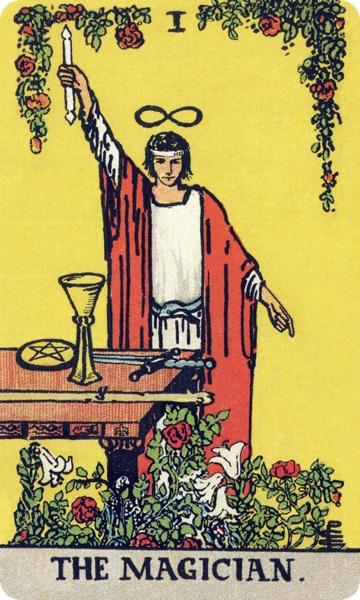
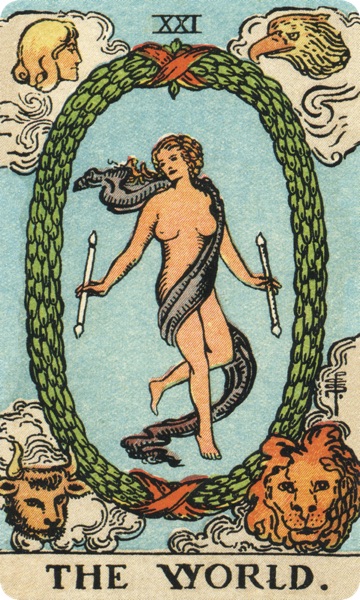
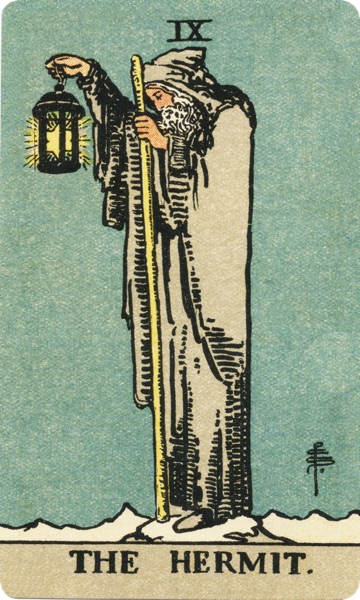
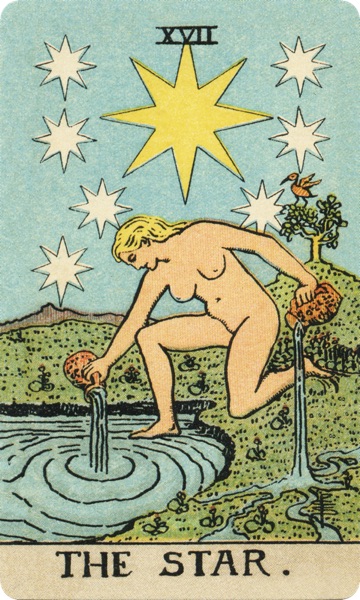
| Related cards | The Magician, The World, The Hermit, The Star |
Overview
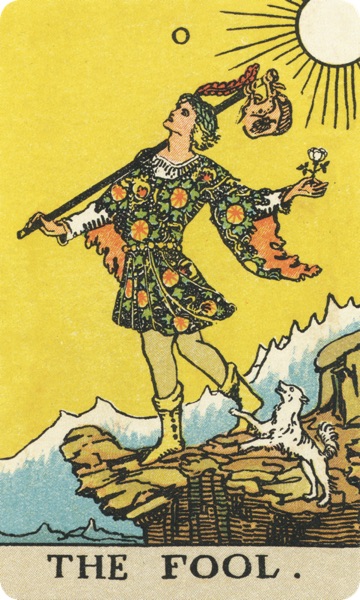
The Fool means the moment before a defined path has taken shape. In the RWS image, a young traveler pauses at the edge of a precipice, looking outward rather than down. A small dog is beside him, a white rose is in one hand, and a wand with a bundle rests over his shoulder.
Waite's 1910 Pictorial Key to the Tarot describes the card in elevated symbolic language:
"He is the spirit in search of experience."
That quote sits in tension with Waite's divinatory keyword list. On the same Wikisource page that gives the Major Arcana meanings, Waite lists The Fool as "Folly, mania, extravagance, intoxication, delirium, frenzy, bewrayment." Modern English tarot sources usually lead with a more open reading. Biddy Tarot lists the upright keywords as "Beginnings, innocence, spontaneity, a free spirit," while Labyrinthos groups the card around beginnings, freedom, innocence, originality, and adventure.
The safest English reading is therefore source-aware: historically, The Fool carries warning language about folly and loss of judgment; in modern RWS practice, it is commonly read as a card of openness, movement, and beginning. Chatarot's English mainline follows the existing short meaning while preserving Waite's harder list as a historical note.
What does The Fool mean upright?
Upright, The Fool means New beginnings, adventure, spontaneity, innocence. It describes a threshold moment: something can begin before every consequence is visible.
In a reading, this card often points to a clean start, an untested path, or a willingness to move without over-controlling the outcome. It is not an instruction to ignore risk. The precipice remains visible in the image, and that is why the card works: the openness is meaningful because the edge is real.
The Fool is useful when a question has become trapped in over-analysis. It can suggest that the next step is small, direct, and exploratory. It is less about having a perfect plan and more about discovering what the path becomes once you start walking.
What does The Fool mean reversed?
Reversed, The Fool means Recklessness, foolishness, danger, stupidity. The same willingness to step forward becomes less grounded when it ignores evidence, timing, or basic responsibility.
Waite's reversed list includes "Negligence, absence, distribution, carelessness, apathy, nullity, vanity." Modern reading often softens that into two practical warnings: either a person is rushing ahead without looking, or they are avoiding a necessary beginning by calling caution wisdom.
The reversed Fool should not be read as punishment for taking a risk. It is more precise than that. It asks whether the risk is chosen with attention, or whether it is being used to avoid fear, boredom, accountability, or planning.
The Fool in love, career, health, and money
Love
In love, The Fool often points to a new chapter. Upright, it can describe a fresh connection, a lighter phase in an existing relationship, or the willingness to meet someone without forcing the whole story in advance.
Reversed, it can show impulsive attachment, avoidance of honest conversation, or a pattern of treating uncertainty as if it were freedom. The useful question is whether the openness is mutual and grounded.
What’s shaping this new connection, and is our openness actually mutual and grounded?
 Star-Sleeping Girl · Sora·
 Celtic Cross
Career
In career readings, The Fool can suggest a first step into new work: a role, project, skill, business idea, or creative direction that is not fully proven yet. It favors experimentation over waiting for total certainty.
Reversed, it warns against quitting, launching, signing, or promising before the basic facts are known. The issue is not risk itself; it is risk without enough attention.
Should I take this career leap now or verify the basics first?
 Mystic Poet · Selene Noir·
 Crossroads of Fate
Health
In health readings, The Fool is best treated as a symbol of beginning a new routine or changing a stale pattern. It can support a gentle restart, especially when the current habit system is too heavy to move. In a tarot reading context, this is a symbolic reminder rather than medical advice.
Reversed, The Fool may point to carelessness with limits or a tendency to treat the body as if consequences do not apply. The grounded response is to seek real information and make changes safely.
How could a gentle restart rebuild my habits without pushing past my limits?
Star-Sleeping Girl · Sora· Flow of Time
Money
In money readings, The Fool can describe a financial beginning: learning a budget, opening an account, starting a small venture, or making a first plan. It is not a promise of profit.
Reversed, it can show impulse spending, poorly researched investment, or an attempt to escape financial anxiety through a dramatic move. The better path is usually a smaller experiment with clearer boundaries.
Where do I need clearer boundaries before testing a small financial idea?
Mystic Poet · Selene Noir· Mirror of Soul
Rider-Waite-Smith imagery and symbols
The public-domain Wikimedia Commons Fool file is dated 1910 in its structured metadata and shows the familiar 0 card with the traveler, dog, precipice, sun, rose, and bundle. This article uses that Commons file as the reproducible image source rather than treating it as proof of a 1909 publication date.
The precipice is the card's central tension. Waite writes that the edge "has no terror," but the image still places the traveler at a real boundary. Chatarot reads that as innocence with consequence, not innocence without consequence.
The dog is visually present beside the figure. It can be read as instinct, loyalty, warning, or life-force, but those meanings should be treated as interpretation unless a specific source is cited. The same rule applies to the bundle: the image shows it clearly, while the meaning of what it contains belongs to interpretation.
The white rose is a commonly discussed symbol. Wikipedia's Fool page connects it with freedom from lower desires. The article uses that as a secondary-source interpretation rather than pretending Waite's image alone proves it.
The number 0 matters because it marks The Fool differently from the numbered sequence I-XXI. In practice, this makes The Fool especially suited to threshold readings: before the story, after the story, or moving through the story without being fixed by it.
Historical position in tarot
The Fool has one of the most unstable positions in tarot history. Wikipedia notes that pre-Waite-Smith decks often leave The Fool unnumbered, while the RWS deck explicitly numbers it 0. The same page also discusses older titles such as Le Mat and Il Matto, which connect the card to the fool, madman, or beggar tradition.
Waite's own placement is also unusual. In the divinatory meanings page, The Fool appears after The Last Judgment and before The World rather than at the beginning of the list. That is useful evidence that The Fool has not always been treated as a simple "first step" card.
For English Chatarot content, the historical note should remain visible: modern readers often ask about new beginnings, but the older tradition carries a sharper warning about folly.
Interpretation disputes
The main dispute is Waite's divinatory list versus the modern RWS mainline. Waite's list begins with folly, mania, extravagance, and intoxication. Modern sources, including Biddy and Labyrinthos, lead with beginnings, innocence, spontaneity, freedom, and adventure.
Chatarot follows the modern/internal upright reading, New beginnings, adventure, spontaneity, innocence, because that matches current English reader expectation and the RWS image. It keeps Waite's harder keywords in the article because ignoring them would make the tradition look cleaner than it is.
FAQ
Is The Fool a good tarot card?
The Fool is usually a positive or open card when upright, but it is not simply "good." It shows possibility before certainty. The quality of the card depends on whether the question needs movement, caution, or a more honest look at risk.
What does The Fool mean in love?
In love, The Fool can point to a new connection, a fresh phase, or a relationship that needs more curiosity and less control. Reversed, it can show impulsiveness or a refusal to have practical conversations.
What is the difference between The Fool and The Magician?
The Fool is possibility before form; The Magician is the ability to direct tools and attention. Together, they can describe the movement from "I can begin" to "I can act with skill."
Why is The Fool numbered 0?
The number 0 marks The Fool as outside the normal numbered progression. It can stand before The Magician, after completion, or as a figure moving through the whole sequence.
Sources and further reading
- Arthur Edward Waite, The Pictorial Key to the Tarot (1910), Fool symbolism, https://en.wikisource.org/wiki/The_Illustrated_Key_to_the_Tarot/Part_2
- Arthur Edward Waite, The Pictorial Key to the Tarot (1910), divinatory meanings, https://en.wikisource.org/wiki/Page:The_Illustrated_Key_to_the_Tarot.djvu/151
- Wikipedia: The Fool (tarot card), https://en.wikipedia.org/wiki/The_Fool_(tarot_card)
- Wikimedia Commons: RWS Tarot 00 Fool, https://commons.wikimedia.org/wiki/File:RWS_Tarot_00_Fool.jpg
- Biddy Tarot: The Fool Tarot Card Meanings, https://biddytarot.com/tarot-card-meanings/major-arcana/fool/
- Labyrinthos: The Fool Meaning, https://labyrinthos.co/blogs/tarot-card-meanings-list/the-fool-meaning-major-arcana-tarot-card-meanings