
The Devil Tarot Card Meaning (Major Arcana XV)
The Devil means a pattern that has power because it offers something seductive, numbing, or familiar. Upright, it points to bondage, materialism, desire, and shadow. Reversed, it points to liberation, breaking free, and facing fears. The card should be read without moral panic or diagnosis.
Quick Facts
| Field | Value |
|---|---|
| Number / Rank | XV / 15 |
| Arcana / Suit | Major Arcana |
| PKT text year | 1910 |
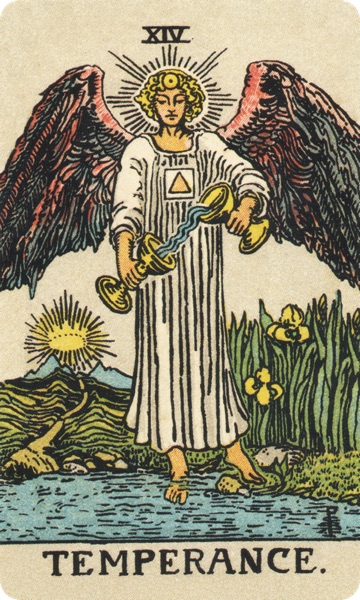
| Source sequence | Temperance -> The Devil -> The Tower |
| Keywords | bondage, attachment, materialism, desire, restriction |
| Upright short meaning | Bondage, materialism, desire, shadow |
| Reversed short meaning | Liberation, breaking free, facing fears |
| Related cards | The Lovers, Strength, The Tower, Temperance |
Overview
The Devil is the Major Arcana card of attachment, compulsion, desire, and the moment when a pattern starts to reduce freedom. In the project sequence it is XV, after Temperance and before The Tower. Upright, The Devil means Bondage, materialism, desire, shadow. Reversed, it means Liberation, breaking free, facing fears.
Waite's 1910 Pictorial Key to the Tarot gives this upright anchor:
"Ravage, violence, vehemence, extraordinary efforts, force, fatality"
That quote is useful, but it is not the whole modern card. Biddy Tarot lists the upright keywords as "Shadow self, attachment, addiction, restriction, sexuality". Labyrinthos discusses bondage, addiction, materialism, playfulness around taboo, restriction, and reversed freedom or release. Chatarot uses those modern sources as interpretation support while keeping Waite's older list visible.
The card is also shaped by its sequence position. It is one of 22 Major Arcana cards, and its number, XV, places it between Temperance and The Tower. That placement helps keep the interpretation specific instead of turning it into a generic advice page.
For Chatarot, The Devil should be direct but not punitive. The card can name bondage, desire, materialism, and shadow without shaming the reader. It should not call a person toxic, diagnose addiction, or suggest that sexuality or pleasure is automatically a problem. The question is whether a pattern is reducing freedom.
This card is also a source integrity test because Waite's language is severe. The article uses a short Waite quote and does not carry over every fatalistic phrase into the body. Modern sources support attachment, restriction, and release, but those meanings remain interpretation rather than a replacement for the primary text.
The Devil is strongest when it asks what the chain gives as well as what it costs. Many binding patterns survive because they offer comfort, identity, status, relief, or predictability. Naming that benefit makes liberation more realistic and less moralizing.
What does The Devil mean upright?
Upright, The Devil means Bondage, materialism, desire, shadow. It appears when a desire, habit, attachment, contract, or story has started to limit freedom.
Waite's old keyword list is harsh, beginning with ravage, violence, vehemence, extraordinary efforts, force, and fatality. Modern sources often translate the card into attachment, restriction, desire, and the shadow self.
In a reading, The Devil is not a license to shame the person. It asks what gives the pattern its grip. Often the chain remains because the pattern also provides relief, pleasure, security, status, or avoidance.
What does The Devil mean reversed?
Reversed, The Devil means Liberation, breaking free, facing fears. The person may be seeing the chain clearly enough to loosen it, or may be ready to name the pattern without collapsing into shame.
Waite's reversed words are still severe, but modern practice often reads the reversal as release. Chatarot follows the internal short meaning while keeping the source distinction visible.
The practical reading is careful: breaking free can be gradual, supported, and imperfect. The card should not be used to diagnose addiction or command someone to leave a situation without real-world safety planning.
The Devil in love, career, health, and money
Love
In love, The Devil can point to attachment, power imbalance, obsession, secrecy, or a relationship pattern that feels difficult to leave even when it narrows the self. It can also describe desire honestly, without assuming desire is bad. Reversed, it may show clearer boundaries, release from a binding pattern, or the first honest conversation about what has been controlling the bond.
Why does this relationship feel so hard to leave, and what’s controlling us?
 Star-Sleeping Girl · Sora·
 Celtic Cross
Career
In career readings, The Devil can show golden-handcuff arrangements, status pressure, burnout loops, coercive management, or work that pays well but narrows the person. Reversed, it may point to renegotiation, leaving a restrictive role, or naming the fear that kept the pattern in place.
Should I renegotiate this restrictive role or leave despite the financial security?
 Mystic Poet · Selene Noir·
 Crossroads of Fate
Health
In health readings, The Devil can symbolically point to compulsive loops, stress patterns, or habits that feel hard to interrupt. In a tarot reading context, this is a symbolic reminder rather than medical advice. Reversed, it can suggest seeking support, reducing shame, and taking one real step toward freedom.
Which habit can I interrupt first to loosen this stress-driven loop?
Star-Sleeping Girl · Sora· Mirror of Soul
Money
In money readings, The Devil can point to debt pressure, compulsive spending, material fixation, or an agreement that trades freedom for comfort. Reversed, it may show a plan to reduce dependence, renegotiate obligations, or stop letting fear drive financial decisions.
How can I stop fear from driving my financial decisions over time?
Mystic Poet · Selene Noir· Flow of Time
Rider-Waite-Smith imagery and symbols
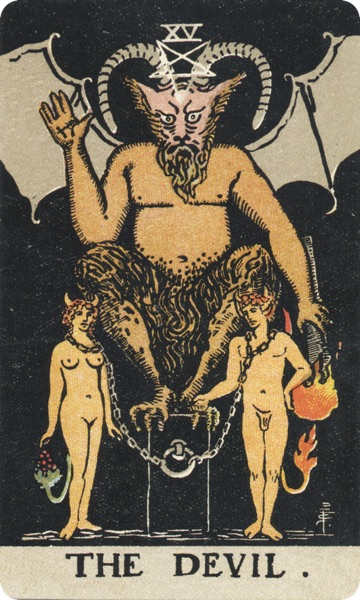
The Rider-Waite-Smith image shows a horned figure above two chained human figures. The visual facts support themes of bondage and attachment, while moral or psychological interpretations must remain careful and contextual.
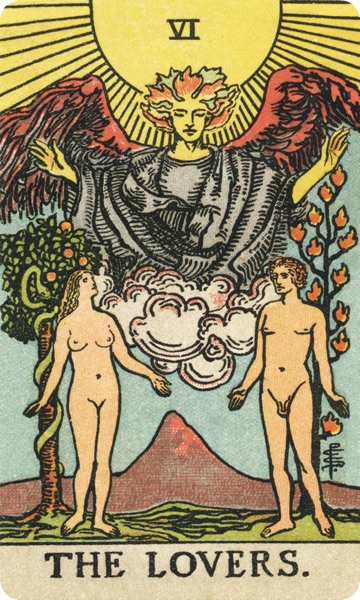
The chains matter because they make the card different from The Lovers. The Lovers asks whether a choice aligns with values; The Devil asks whether a choice still feels like a choice.
This article avoids claiming that Smith created any specific symbol system. It describes what the public-domain image shows and marks the reading as interpretation.
Historical position in tarot
Historically, The Devil is Major Arcana XV, between Temperance and The Tower. Wikipedia supports the broad card identity, and Waite supplies a severe 1910 keyword list. Modern English tarot often moves the meaning toward attachment and liberation, which is why this article separates primary wording from contemporary reading.
Interpretation disputes
The Devil requires source-aware dispute framing because its image and older keywords can push writers into fear, shame, or literal prediction. Waite is severe; modern sources often emphasize attachment, restriction, sexuality, shadow, and release. Chatarot treats the card as a symbolic account of bondage and agency, not as a diagnosis, moral verdict, or claim that a person is doomed.
A final review boundary is safety. If the reading context involves coercion, dependency, violence, or serious health concerns, the article should never imply that tarot alone is enough. The card can name the symbolic pattern and encourage support, but real-world safety and qualified help matter.
FAQ
Does The Devil mean evil?
Not necessarily. It can point to bondage, attachment, desire, materialism, or a pattern that reduces freedom. The reading should stay contextual.
What does The Devil reversed mean?
It often points to liberation, breaking free, facing fears, or seeing a binding pattern clearly enough to loosen it.
Is The Devil about addiction?
It can symbolically describe compulsive patterns, but tarot should not diagnose addiction. Use real-world support when health, safety, or dependency is involved.
Sources and further reading
- Arthur Edward Waite, The Pictorial Key to the Tarot (1910), Wikisource proofread page, https://en.wikisource.org/wiki/Page:The_Illustrated_Key_to_the_Tarot.djvu/151
- Wikipedia: The Devil tarot card, https://en.wikipedia.org/wiki/The_Devil_(tarot_card)
- Wikimedia Commons: RWS Tarot 15 Devil, https://commons.wikimedia.org/wiki/File:RWS_Tarot_15_Devil.jpg
- Biddy Tarot: The Devil Tarot Card Meanings, https://biddytarot.com/tarot-card-meanings/major-arcana/devil/
- Labyrinthos: The Devil Meaning, https://labyrinthos.co/blogs/tarot-card-meanings-list/the-devil-meaning-major-arcana-tarot-card-meanings