
The Tower Tarot Card Meaning (Major Arcana XVI)
The Tower is the Major Arcana card of sudden disruption and exposed truth. In the Rider-Waite-Smith sequence it is numbered XVI, after The Devil and before The Star. Upright, The Tower means Sudden change, chaos, revelation, awakening. Reversed, it means Avoiding destruction, fear of change, suppression.
Quick Facts
| Field | Value |
|---|---|
| Number / Rank | XVI / 16 |
| Arcana / Suit | Major Arcana |
| RWS year | 1909 |
| PKT text year | 1910 |
| Keywords | disruption, exposure, collapse, release, rebuilding |
| Upright short meaning | Sudden change, chaos, revelation, awakening |
| Reversed short meaning | Avoiding destruction, fear of change, suppression |
| Related cards | The Devil, The Star, Death, The Sun |
Overview
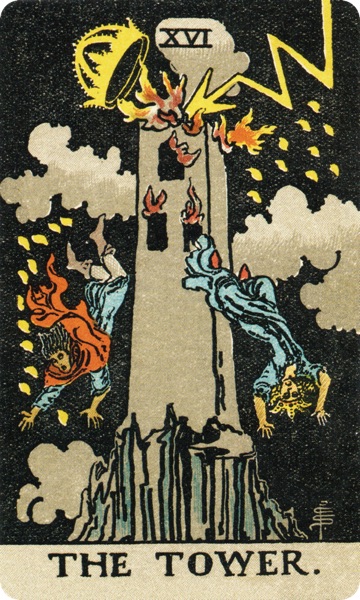
The Tower means a structure can no longer hold its old form. In the RWS image, lightning strikes a tower, a crown is knocked away, flames appear, and two figures fall. The card is visually severe because the change it describes is not subtle.
Waite's 1910 divinatory list is direct:
"Misery, distress, indigence, adversity, calamity, disgrace, deception, ruin."
He also writes that The Tower is "a card in particular of unforeseen catastrophe." Modern English tarot sources often reframe that severity as necessary revelation or release. Biddy Tarot lists the upright keywords as "Sudden change, upheaval, chaos, revelation, awakening," while Labyrinthos groups the card around disaster, destruction, upheaval, trauma, sudden change, and chaos.
The English article should not make The Tower sound gentle. It should also not turn the card into a fatalistic prediction. A source-aware reading can say: the card often shows a dramatic break in a false or unstable structure, and modern interpretation asks what can be rebuilt after the break.
What does The Tower mean upright?
Upright, The Tower means Sudden change, chaos, revelation, awakening. It appears when a truth, structure, plan, or identity can no longer stay hidden or intact.
In a reading, The Tower can describe a shock, a breakup, a failed project, a public exposure, or an inner realization that changes the terms of the question. It does not always point to an external disaster. Sometimes the tower falls inside: a belief breaks, and the person cannot honestly live by it anymore.
The useful part of The Tower is not the impact itself; it is the clearing that follows. If something was built on denial, fear, dependency, or false stability, the card can show that the old arrangement is losing its power.
What does The Tower mean reversed?
Reversed, The Tower means Avoiding destruction, fear of change, suppression. Waite gives the reversed meaning as "the same in a lesser degree" and also "oppression, imprisonment, tyranny."
Modern readers often treat the reversal as delayed disruption, internalized pressure, or resistance to a necessary break. The structure may already be cracking, but the person is still trying to hold it together.
The reversed Tower is not automatically easier than the upright card. It can be quieter and more prolonged. The central question is whether avoiding the break is reducing harm or simply stretching the crisis.
The Tower in love, career, health, and money
Love
In love, The Tower can point to a relationship shock: a truth comes out, a conflict becomes impossible to avoid, or a dynamic that looked stable stops working. Upright, the card says the old arrangement cannot be assumed anymore.
Reversed, it can show a relationship avoiding its own crisis. The people involved may know what needs to be said, but keep choosing delay. The card asks whether avoiding the conflict is actually protecting the relationship.
Should I face the truth with my partner now or keep waiting?
 Star-Sleeping Girl · Sora·
 Crossroads of Fate
Career
In career readings, The Tower can describe sudden change at work: a failed launch, a job ending, a leadership shake-up, or the collapse of a plan that was not structurally sound.
Reversed, it can show fear of changing a work situation that is already unstable. It may also describe trying to preserve a role, team, or project after the real foundation has shifted.
What’s really collapsing at work, and how should I rebuild from it?
 Mystic Poet · Selene Noir·
 Celtic Cross
Health
In health readings, The Tower should be handled with care. Symbolically, it can point to a signal that has become hard to ignore, or to the need to stop pretending an unsustainable pattern is working. In a tarot reading context, this is a symbolic reminder rather than medical advice.
Reversed, it may suggest avoidance: not wanting to look at stress, limits, or warning signs. The grounded response is to seek real support and avoid turning the card into a diagnosis or prediction.
Which unsustainable habit or pace do I need to stop ignoring?
Star-Sleeping Girl · Sora· Mirror of Soul
Money
In money readings, The Tower can point to sudden financial pressure: a surprise expense, a budget failure, a risky structure breaking down, or a hidden problem becoming visible.
Reversed, it can show financial avoidance. The card does not guarantee loss. It asks where the numbers, assumptions, or obligations need to be faced before the situation becomes harder to repair.
How will facing my hidden financial obligations now change what comes next?
Mystic Poet · Selene Noir· Flow of Time
Rider-Waite-Smith imagery and symbols
The RWS Tower image shows a tower struck by lightning, a falling crown, two falling figures, flames, clouds, and a dark sky. These are visual facts visible in the public-domain image.
The lightning is the central image of interruption. Chatarot reads it as a force that comes from outside the existing structure, but that is interpretation. The sourced visual fact is simpler: the tower is struck.
The falling crown matters because it suggests a loss of false authority or unstable control. Wikipedia's Tower page discusses the crown as a symbol in relation to materialistic thought being downcast; because Wikipedia is secondary, this article treats that as a supported summary rather than primary doctrine.
The yod-shaped flames are a high-risk agency point. Wikipedia says Smith's version replaced the multicolored balls of Marseille-style imagery with small tongues of fire in the shape of Hebrew yod letters. The article can state that source-backed fact. It should not say Smith "created the system" or personally intended a specific doctrine unless a source says so.
The two falling figures are often read as people thrown out of a false structure. That is useful interpretation, but it is not presented as a sourced historical fact here.
Historical position in tarot
Wikipedia summarizes several historical points that matter for The Tower. Early Visconti-Sforza decks do not contain the card. Belgian tarots and the 17th-century Viéville deck call it La Foudre, or lightning, and depict a tree struck by lightning.
The Marseille tradition moves toward the familiar burning tower with falling figures. RWS keeps the struck tower and falling figures, but the image differs in details such as the yod-shaped flames.
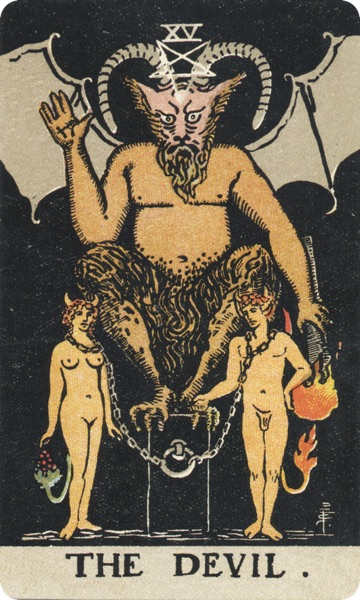
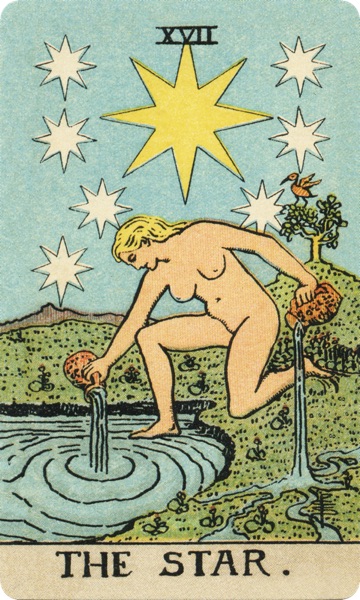
The Tower's position in the Major Arcana is also part of its modern reading. It follows The Devil, a card often read around bondage or entrapment, and precedes The Star, the card of hope after disruption. That sequence supports the interpretation of The Tower as harsh exposure before repair.
Interpretation disputes
The Tower has a real interpretive split. Waite's divinatory language is severe: misery, adversity, calamity, deception, ruin, and unforeseen catastrophe. Modern sources often keep the shock but add a psychological frame: revelation, awakening, and necessary change.
Chatarot's English content follows the internal short meaning, Sudden change, chaos, revelation, awakening, while keeping Waite's harsher language visible. That avoids two errors: making The Tower falsely comforting, or making it a deterministic threat.
FAQ
Is The Tower the worst tarot card?
The Tower is one of the most intense cards, but calling it the worst is too simple. It often points to disruption and exposure. The hard part is the shock; the useful part is that a false structure can stop controlling the situation.
What does The Tower mean in love?
In love, The Tower can mean a major relationship disruption, truth coming out, or a pattern that cannot continue unchanged. Reversed, it can show avoidance of a crisis that both people already sense.
What happens after The Tower?
In the Major Arcana sequence, The Star follows The Tower. That does not erase the shock, but it gives the sequence a recovery arc: collapse, then the first light of repair.
What is the difference between The Tower upright and reversed?
Upright, The Tower is the break becoming visible. Reversed, it is often the attempt to delay, suppress, or minimize the break. The reversal can be quieter, but it is not always easier.
Sources and further reading
- Arthur Edward Waite, The Pictorial Key to the Tarot (1910), divinatory meanings, https://en.wikisource.org/wiki/Page:The_Illustrated_Key_to_the_Tarot.djvu/151
- Wikipedia: The Tower (tarot card), https://en.wikipedia.org/wiki/The_Tower_(tarot_card)
- Wikimedia Commons: RWS Tarot 16 Tower, https://commons.wikimedia.org/wiki/File:RWS_Tarot_16_Tower.jpg
- Biddy Tarot: The Tower Tarot Card Meanings, https://biddytarot.com/tarot-card-meanings/major-arcana/tower/
- Labyrinthos: The Tower Meaning, https://labyrinthos.co/blogs/tarot-card-meanings-list/the-tower-meaning-major-arcana-tarot-card-meanings