
Temperance Tarot Card Meaning (Major Arcana XIV)
Temperance means balance made through practice. Upright, it points to balance, moderation, purpose, and harmony. Reversed, it warns of imbalance, excess, and discord. The card is calmer than Death and less bound than The Devil; it is the art of mixing what has to work together.
Quick Facts
| Field | Value |
|---|---|
| Number / Rank | XIV / 14 |
| Arcana / Suit | Major Arcana |
| PKT text year | 1910 |
| Source sequence | Death -> Temperance -> The Devil |
| Keywords | balance, moderation, harmony, integration, patience |
| Upright short meaning | Balance, moderation, purpose, harmony |
| Reversed short meaning | Imbalance, excess, discord |
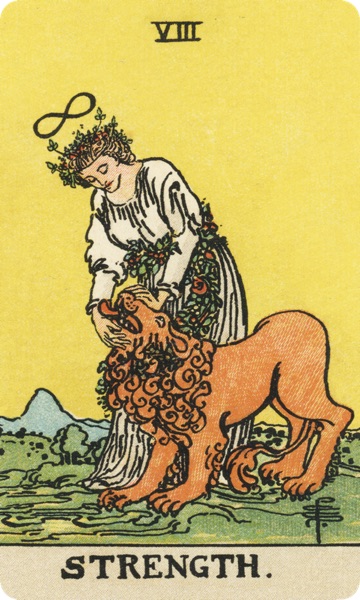
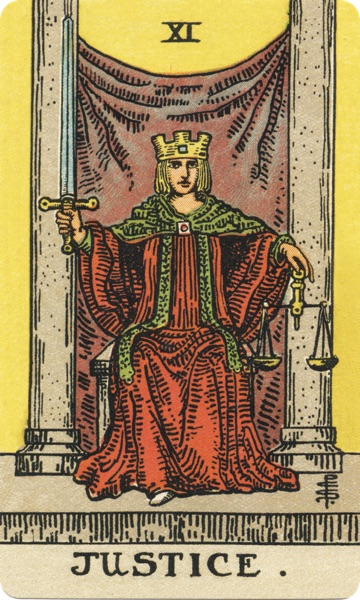
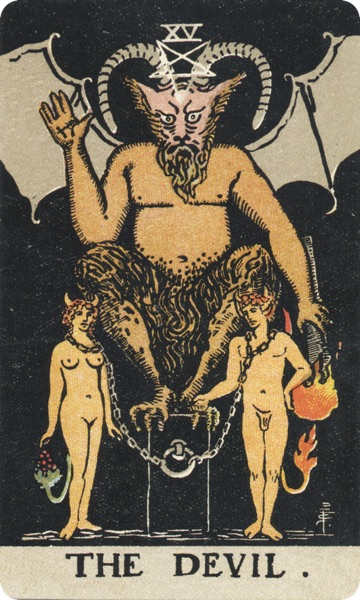
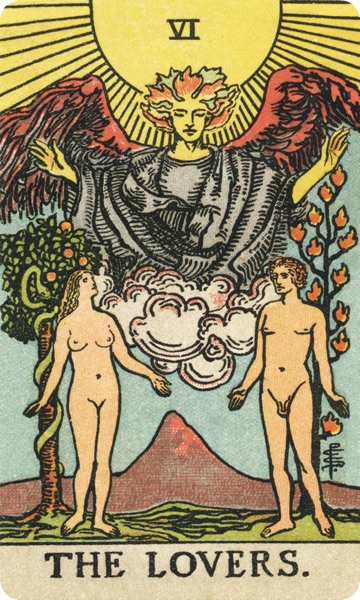
| Related cards | Strength, Justice, The Devil, The Lovers |
Overview
Temperance is the Major Arcana card of balance, measured change, and the blending of parts that cannot simply be forced together. In the project sequence it is XIV, after Death and before The Devil. Upright, Temperance means Balance, moderation, purpose, harmony. Reversed, it means Imbalance, excess, discord.
Waite's 1910 Pictorial Key to the Tarot gives this upright anchor:
"Economy, moderation, frugality, management, accommodation."
That quote is useful, but it is not the whole modern card. Biddy Tarot lists the upright keywords as "Balance, moderation, patience, purpose". Labyrinthos discusses Temperance through balance, peace, patience, moderation, harmony, and finding the middle path. Chatarot uses those modern sources as interpretation support while keeping Waite's older list visible.
The card is also shaped by its sequence position. It is one of 22 Major Arcana cards, and its number, XIV, places it between Death and The Devil. That placement helps keep the interpretation specific instead of turning it into a generic advice page.
For Chatarot, Temperance should feel practical rather than vague. Balance is not a decorative word; it is a task of proportion, timing, and combination. The card asks how much, how fast, with whom, and under what limits. That makes it useful in work, love, money, and health readings without turning it into generic wellness language.
The card also needs careful health language because moderation can sound like advice if written too directly. The required disclaimer keeps the reading symbolic. A tarot article can say the card points to sustainable rhythms or avoiding extremes; it should not prescribe treatment, diet, medication, or a clinical plan.
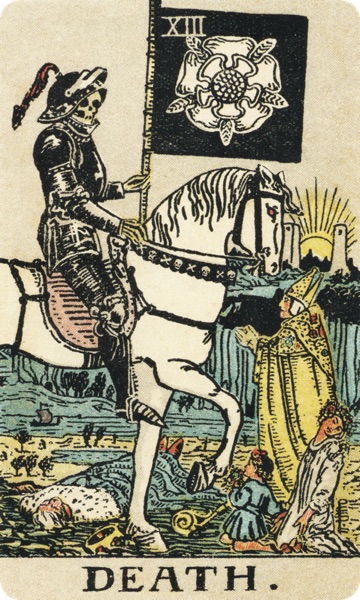
Temperance sits between Death and The Devil, and that sequence is interpretively useful. After Death, something has ended. Before The Devil, imbalance can harden into bondage. Temperance is the middle art: integrating change before it becomes another extreme.
What does Temperance mean upright?
Upright, Temperance means Balance, moderation, purpose, harmony. It appears when the answer is not force or avoidance, but proportion.
Waite lists economy, moderation, frugality, management, and accommodation. Biddy lists balance, moderation, patience, and purpose. Both sources keep the card practical rather than vague.
In a reading, Temperance can describe pacing, compromise, integration, or the patient work of combining two conditions that do not naturally fit. It asks for skill with limits.
What does Temperance mean reversed?
Reversed, Temperance means Imbalance, excess, discord. The mixture is off: too much, too little, too fast, or pulled in competing directions.
Waite's reversed line includes disunion, unfortunate combinations, and competing interests. That phrasing is useful because the reversal is not only about personal excess. It can also describe systems or relationships that cannot blend under current conditions.
The grounded response is to reduce extremes. Find the variable that can be adjusted first: timing, expectation, quantity, communication, or commitment.
Temperance in love, career, health, and money
Love
In love, Temperance points to patience, repair, and emotional pacing. It can support reconciliation when both people are willing to adjust. Reversed, it may show extremes: one person rushing while another withdraws, or a relationship trying to combine needs that have not been honestly named.
Should I keep adjusting with my partner or step back from this imbalance?
 Star-Sleeping Girl · Sora·
 Crossroads of Fate
Career
In career readings, Temperance favors coordination, project pacing, and the integration of different roles. It is a strong card for process improvement and careful collaboration. Reversed, it can show competing priorities, burnout from excess, or teams that are not aligned around the same purpose.
How can I align competing priorities without burning out my team?
 Mystic Poet · Selene Noir·
 Celtic Cross
Health
In health readings, Temperance can symbolically point to moderation, recovery rhythms, and sustainable routines. In a tarot reading context, this is a symbolic reminder rather than medical advice. Reversed, it may suggest excess, inconsistency, or a need to seek real support instead of trying to self-balance everything alone.
What sustainable routine would help me balance effort, rest, and support?
Star-Sleeping Girl · Sora· Mirror of Soul
Money
In money readings, Temperance favors measured planning, budgeting, and avoiding extremes. It can support slow stabilization. Reversed, it may warn of spending swings, incompatible financial priorities, or trying to solve a structural problem with a short-term fix.
How will measured budgeting change my current cycle of spending swings?
Mystic Poet · Selene Noir· Flow of Time
Rider-Waite-Smith imagery and symbols
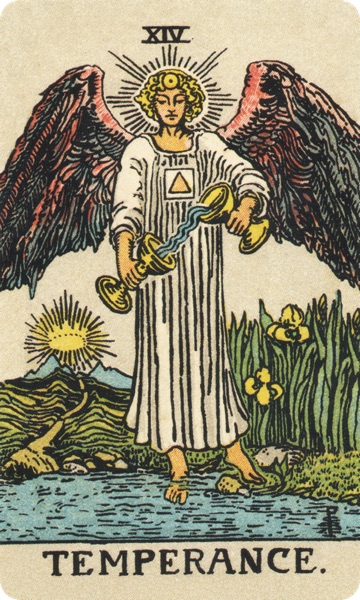
The Rider-Waite-Smith image shows an angelic figure pouring liquid between two cups, with one foot near water and one on land. The visual facts support readings about mixing, balance, and mediation.
Temperance belongs near Death and The Devil in sequence, which matters. After an ending, the next task is integration; before bondage or excess appears, the card teaches proportion.
The article uses conservative agency wording and treats symbolic readings as interpretation rather than direct historical fact.
Historical position in tarot
Historically, Temperance is Major Arcana XIV and one of the virtue cards in the sequence. Wikipedia supports the card identity and broad overview; Waite supplies the 1910 divinatory list. This article avoids unsupported claims about all earlier images and keeps the history source-aware.
A second practical note is that Temperance often shows up when two good things still conflict. Work and rest, intimacy and independence, saving and spending, honesty and tact: each side may have value, but the mixture still needs adjustment. This is why the card is not the same as simple compromise. Compromise can split the difference without solving the design problem. Temperance asks for a blend that can actually hold.
A final source-aware boundary: Temperance should not be written as if balance is always quiet or easy. Sometimes balance requires stopping an excess, naming a conflict, or changing the container so the mixture can work. The card is gentle in tone, but it is not passive.
This is also why the card can be useful after disruption. It does not pretend the old form can return unchanged. It asks what new proportion can keep the next form livable.
That makes Temperance small-scale and structural at the same time.
The reading should ask where proportion has been lost.
FAQ
Is Temperance only about moderation?
Moderation is central, but the card also means integration, pacing, harmony, and purposeful balance.
What does Temperance reversed mean?
It can mean imbalance, excess, discord, or competing interests that cannot blend under current conditions.
How is Temperance different from Justice?
Justice asks what is fair and true. Temperance asks what can be blended, paced, and made sustainable.
Sources and further reading
- Arthur Edward Waite, The Pictorial Key to the Tarot (1910), Wikisource proofread page, https://en.wikisource.org/wiki/Page:The_Illustrated_Key_to_the_Tarot.djvu/151
- Wikipedia: Temperance tarot card, https://en.wikipedia.org/wiki/Temperance_(tarot_card)
- Wikimedia Commons: RWS Tarot 14 Temperance, https://commons.wikimedia.org/wiki/File:RWS_Tarot_14_Temperance.jpg
- Biddy Tarot: Temperance Tarot Card Meanings, https://biddytarot.com/tarot-card-meanings/major-arcana/temperance/
- Labyrinthos: Temperance Meaning, https://labyrinthos.co/blogs/tarot-card-meanings-list/temperance-meaning-major-arcana-tarot-card-meanings