
Justice Tarot Card Meaning (Major Arcana XI)
Justice means truth applied to consequences. In this project Justice is Major Arcana XI, because Strength is VIII in the RWS sequence already used by Chatarot. Upright, Justice means justice, truth, honesty, and cause and effect. Reversed, it warns of injustice, dishonesty, or imbalance.
Quick Facts
| Field | Value |
|---|---|
| Number / Rank | XI / 11 |
| Arcana / Suit | Major Arcana |
| PKT text year | 1910 |
| Source sequence | Wheel of Fortune -> Justice -> The Hanged Man |
| Keywords | justice, truth, fairness, accountability, cause and effect |
| Upright short meaning | Justice, truth, honesty, cause and effect |
| Reversed short meaning | Injustice, dishonesty, imbalance |
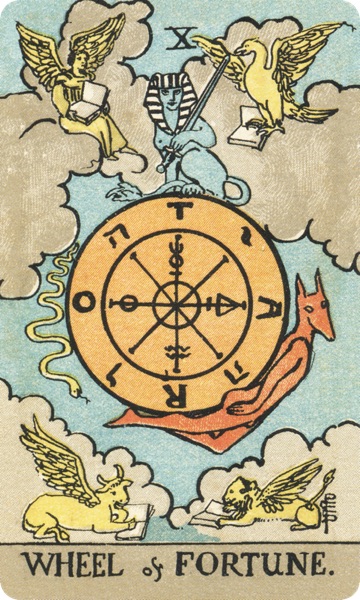
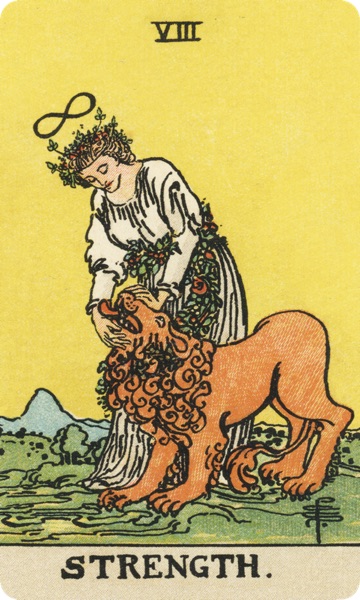
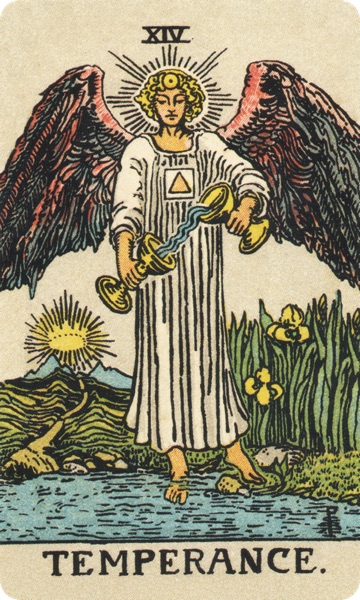
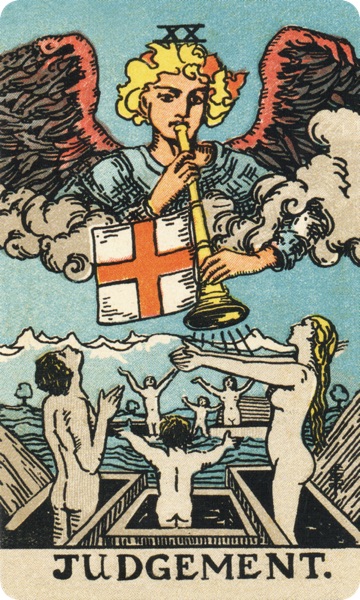
| Related cards | Wheel of Fortune, Strength, Temperance, Judgement |
Overview
Justice is the Major Arcana card of accountability, clear judgment, and the consequences of choices. In the project sequence it is XI, after Wheel of Fortune and before The Hanged Man. Upright, Justice means Justice, truth, honesty, cause and effect. Reversed, it means Injustice, dishonesty, imbalance.
Waite's 1910 Pictorial Key to the Tarot gives this upright anchor:
"Equity, rightness, probity, executive"
That quote is useful, but it is not the whole modern card. Biddy Tarot lists the upright keywords as "Justice, fairness, truth, cause and effect, law". Labyrinthos discusses Justice through truth, fairness, law, cause and effect, clarity, accountability, and impartial judgment. Chatarot uses those modern sources as interpretation support while keeping Waite's older list visible.
The card is also shaped by its sequence position. It is one of 22 Major Arcana cards, and its number, XI, places it between Wheel of Fortune and The Hanged Man. That placement helps keep the interpretation specific instead of turning it into a generic advice page.
For Chatarot, Justice needs a narrow and careful English tone. It can touch legal matters, but the article should not give legal advice or imply that a tarot card determines guilt, innocence, or official outcomes. The safer reading is about truth, evidence, accountability, and consequences within the symbolic frame of the spread.
The numbering point also deserves to stay visible. This project uses Justice as XI and Strength as VIII, matching the current data and RWS-style sequence already used in the English content. That is not a universal tarot rule, so the article should present it as the project sequence rather than pretending every deck orders the cards this way.
Justice also differs from Temperance. Temperance blends and moderates; Justice distinguishes, weighs, and names what is fair. When readers confuse the two, Justice becomes too soft. The card may ask for compassion, but it also asks for a standard that can survive contact with facts.
What does Justice mean upright?
Upright, Justice means Justice, truth, honesty, cause and effect. The card asks what is fair, what is accurate, and what consequences follow from the facts.
Waite begins with equity, rightness, and probity. Biddy adds fairness, truth, cause and effect, and law. The shared center is judgment that should not be bent by preference.
In a reading, Justice is not only about courts or official systems. It can describe accountability in a relationship, a decision that requires evidence, or the moment when a choice must match the truth already known.
What does Justice mean reversed?
Reversed, Justice means Injustice, dishonesty, imbalance. The facts may be hidden, the standard may be uneven, or someone may be avoiding accountability.
Waite's reversed list includes law, legal complications, bigotry, bias, and excessive severity. That helps keep the reversal from becoming vague. The problem may be unfairness, but it may also be a rigid system pretending to be fair.
The useful response is to separate evidence from reaction. What is documented? What standard is being applied? Who benefits if the imbalance remains unnamed?
Justice in love, career, health, and money
Love
In love, Justice asks for honesty and fair terms. It can show a relationship conversation where both people need to name what is true, not only what is comfortable. Reversed, it may show blame, unequal standards, avoidance, or a pattern where one person carries consequences that belong to both.
Should I ask for equal accountability or keep carrying consequences alone?
 Star-Sleeping Girl · Sora·
 Crossroads of Fate
Career
In career readings, Justice can point to contracts, policy, accountability, evaluation, or a decision that must be documented. It favors transparency and careful records. Reversed, it can warn about bias, unclear expectations, or a workplace process that is not as impartial as it claims.
What factors are making my workplace evaluation feel biased or unclear?
 Mystic Poet · Selene Noir·
 Celtic Cross
Health
In health readings, Justice can symbolically point to cause and effect: routines, choices, records, and honest assessment. In a tarot reading context, this is a symbolic reminder rather than medical advice. Reversed, it may suggest imbalance or the need to seek clearer information rather than self-blame.
Which daily habit is most affecting my sense of balance right now?
Star-Sleeping Girl · Sora· Mirror of Soul
Money
In money readings, Justice favors clean records, fair agreements, and understanding consequences before signing or spending. Reversed, it can point to hidden costs, unequal arrangements, or avoiding the reality of a debt, obligation, or budget.
If I face my obligations now, how might my finances develop?
Mystic Poet · Selene Noir· Flow of Time
Rider-Waite-Smith imagery and symbols
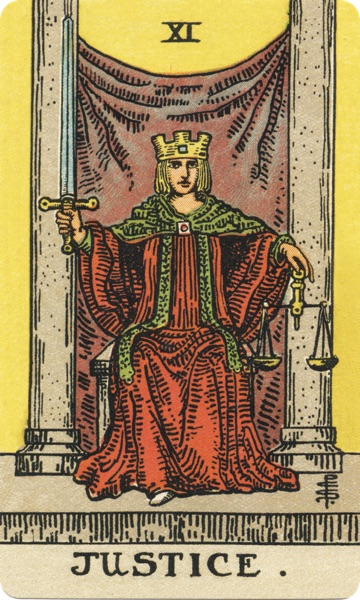
The Rider-Waite-Smith image shows a seated figure with scales and a sword. Those visual facts support readings around balance, judgment, and decision, while specific symbolic attributions should remain source-aware.
Justice is numbered XI in this project and in the RWS-style sequence used here. This matters because some tarot systems exchange Justice and Strength; Chatarot keeps Justice as XI to match the current data.
The article treats visual claims as direct observation of the public-domain RWS file and does not overstate agency claims.
Historical position in tarot
Historically, Justice is one of the Major Arcana virtue cards. For this English article, the key project fact is numbering: Justice is XI, while Strength is VIII. Wikipedia supports the card overview, and Waite provides the 1910 divinatory text.
For QA, Justice should be checked for legal overreach. It is fine to mention contracts, policy, documents, accountability, and official processes. It is not fine to imply that the card predicts a lawsuit result or replaces professional advice. The safest English wording keeps Justice symbolic and practical: examine the evidence, apply the same standard to everyone, and notice where cause and effect are already visible.
A final practical boundary: Justice can ask for receipts, timelines, policies, and honest records. It can also ask the reader to apply the same standard to themselves that they want applied to someone else. That is uncomfortable, but it is what keeps the card from becoming mere blame.
The card is cleanest when it asks for accountability before outcome.
FAQ
Is Justice always about legal matters?
No. It can be legal, but it also covers truth, fairness, accountability, and cause and effect in ordinary decisions.
Why is Justice XI here?
The project follows the RWS-style numbering where Strength is VIII and Justice is XI.
What does Justice reversed mean?
It can mean injustice, dishonesty, imbalance, bias, or consequences being avoided.
Sources and further reading
- Arthur Edward Waite, The Pictorial Key to the Tarot (1910), Wikisource proofread page, https://en.wikisource.org/wiki/Page:The_Illustrated_Key_to_the_Tarot.djvu/150
- Wikipedia: Justice tarot card, https://en.wikipedia.org/wiki/Justice_(tarot_card)
- Wikimedia Commons: RWS Tarot 11 Justice, https://commons.wikimedia.org/wiki/File:RWS_Tarot_11_Justice.jpg
- Biddy Tarot: Justice Tarot Card Meanings, https://biddytarot.com/tarot-card-meanings/major-arcana/justice/
- Labyrinthos: Justice Meaning, https://labyrinthos.co/blogs/tarot-card-meanings-list/justice-meaning-major-arcana-tarot-card-meanings