
The Hanged Man Tarot Card Meaning (Major Arcana XII)
The Hanged Man means suspension that changes perspective. Upright, it points to sacrifice, insight, letting go, and suspension. Reversed, it can show delays, resistance, or futility. The card is high-risk because its image can be read too literally; Chatarot treats it as symbolic pause, not harm prediction.
Quick Facts
| Field | Value |
|---|---|
| Number / Rank | XII / 12 |
| Arcana / Suit | Major Arcana |
| PKT text year | 1910 |
| Source sequence | Justice -> The Hanged Man -> Death |
| Keywords | suspension, sacrifice, insight, surrender, pause |
| Upright short meaning | Sacrifice, insight, letting go, suspension |
| Reversed short meaning | Delays, resistance, futility |
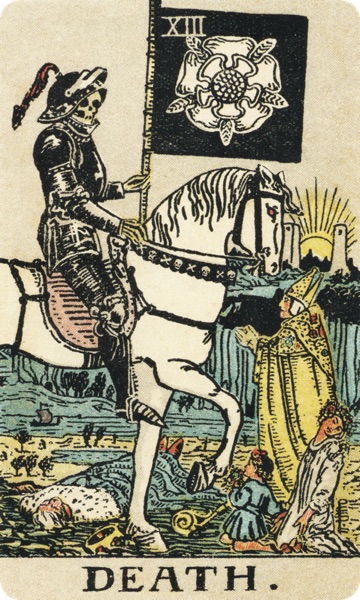
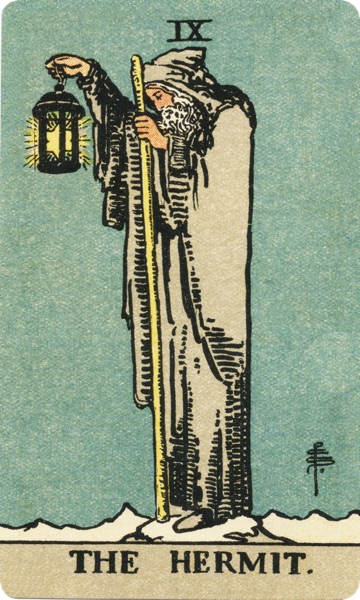
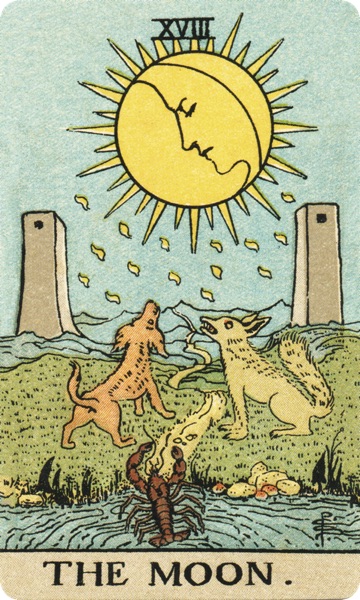
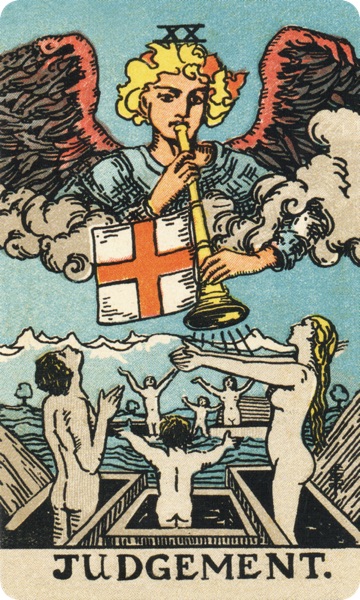
| Related cards | Death, The Hermit, The Moon, Judgement |
Overview
The Hanged Man is the Major Arcana card of suspension, surrender, and the uncomfortable insight that arrives when action stops. In the project sequence it is XII, after Justice and before Death. Upright, The Hanged Man means Sacrifice, insight, letting go, suspension. Reversed, it means Delays, resistance, futility.
Waite's 1910 Pictorial Key to the Tarot gives this upright anchor:
"Wisdom, circumspection, discernment, trials, sacrifice, intuition, divination, prophecy."
That quote is useful, but it is not the whole modern card. Biddy Tarot lists the upright keywords as "Pause, surrender, letting go, new perspectives". Labyrinthos discusses sacrifice, waiting, uncertainty, lack of direction, perspective, and contemplation, with reversed material around stalling and avoiding sacrifice. Chatarot uses those modern sources as interpretation support while keeping Waite's older list visible.
The card is also shaped by its sequence position. It is one of 22 Major Arcana cards, and its number, XII, places it between Justice and Death. That placement helps keep the interpretation specific instead of turning it into a generic advice page.
For Chatarot, The Hanged Man should be written without glamorizing suffering. Sacrifice is part of the card's source language, but not every sacrifice is wise, chosen, or meaningful. The article should ask whether the pause creates insight, not assume that pain automatically purifies the situation.
The card is also a useful test of interpretation voice. A strong reading says suspension can change perspective. A weak reading turns delay into a mystical virtue and gives the person no practical question to answer. The practical questions are concrete: what is being released, what has stopped working, and what becomes visible only because motion has paused?
This keeps The Hanged Man distinct from Death. Death closes a form so another can emerge. The Hanged Man remains inside the suspended moment, learning from the reversal before any final ending is named.
What does The Hanged Man mean upright?
Upright, The Hanged Man means Sacrifice, insight, letting go, suspension. It appears when progress comes through stopping, yielding, or seeing the question from a reversed angle.
Waite's list includes wisdom, circumspection, discernment, trials, sacrifice, intuition, divination, and prophecy. Biddy condenses the modern reading into pause, surrender, letting go, and new perspectives.
In a reading, this card often asks what cannot be solved by force. The suspension may be frustrating, but it can reveal what ordinary momentum was hiding.
What does The Hanged Man mean reversed?
Reversed, The Hanged Man means Delays, resistance, futility. The pause has stopped teaching, or the person is refusing the surrender that would make the pause useful.
Waite's reversed words are very different from many modern readings, naming selfishness, the crowd, and body politic. Chatarot keeps that source separate and uses the internal short meaning for the practical reading.
The reversed card can show stalling, martyrdom, or waiting without reflection. The question is whether the delay contains insight or only avoidance.
The Hanged Man in love, career, health, and money
Love
In love, The Hanged Man can point to a relationship pause, a need to stop pushing for an answer, or the sacrifice of an old position so a clearer truth can appear. Reversed, it can show waiting that has become resentment, or a person staying suspended because choosing would require loss.
Why am I still waiting when choosing means letting something go?
 Star-Sleeping Girl · Sora·
 Celtic Cross
Career
In career readings, the card can describe stalled projects, sabbaticals, review periods, or the need to change perspective before acting. Upright, the delay can be meaningful. Reversed, it may show wasted time, resistance to a necessary pivot, or a role where effort no longer changes the outcome.
Should I keep pushing this stalled role or make the necessary pivot?
 Mystic Poet · Selene Noir·
 Crossroads of Fate
Health
In health readings, The Hanged Man can symbolically point to rest, patience, and accepting limits while perspective changes. In a tarot reading context, this is a symbolic reminder rather than medical advice. Reversed, it may suggest frustration with delay or the need to distinguish patience from giving up.
Where do I need to accept my limits without giving up?
Star-Sleeping Girl · Sora· Mirror of Soul
Money
In money readings, The Hanged Man asks for restraint. A purchase, investment, or obligation may need to pause until the full cost is visible. Reversed, it can warn against money being stuck in a plan that no longer makes sense.
How will pausing now help me see the full financial cost?
Mystic Poet · Selene Noir· Flow of Time
Rider-Waite-Smith imagery and symbols
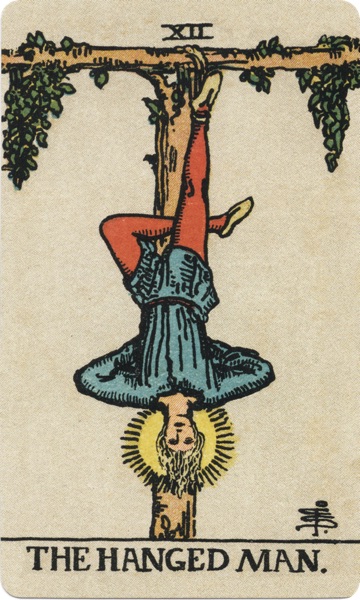
The Rider-Waite-Smith image shows a suspended figure, often read through the calm posture and changed orientation rather than literal danger. The visual fact is suspension; the interpretive claim is perspective.
The figure's stillness is central. Unlike The Chariot, which directs movement, The Hanged Man removes movement so a different kind of knowledge can appear.
This article avoids turning the image into a prediction of harm. It also avoids unsupported claims about who assigned each symbol.
Historical position in tarot
Historically, The Hanged Man is Major Arcana XII. Wikipedia supports the card identity and broad overview. Waite supplies a striking 1910 list that includes both sacrifice and forms of insight, which helps explain why modern readings emphasize surrender and perspective.
Interpretation disputes
The Hanged Man needs a dispute section because the image is dramatic and the source traditions do not all emphasize the same thing. Waite includes wisdom and sacrifice, while many modern sources lead with pause, surrender, and new perspective. Chatarot uses the card symbolically: suspension can create insight, but the article does not romanticize suffering or treat delay as automatically meaningful.
The Hanged Man also needs consent-aware language. A chosen pause is different from being trapped by another person's control. A reading can ask what surrender might teach, but it should not tell someone to accept harm, coercion, or unsafe conditions as spiritual growth. That boundary is part of the card's modern responsibility.
FAQ
Is The Hanged Man a bad card?
Not necessarily. Upright it often means a meaningful pause or changed perspective. Reversed, the pause may become delay, resistance, or futility.
Does The Hanged Man mean sacrifice?
Yes, sacrifice is part of both Waite and modern readings, but it should be understood symbolically and contextually.
What is the difference between The Hanged Man and The Hermit?
The Hermit withdraws to seek wisdom. The Hanged Man is suspended by a situation that requires surrender or a changed angle.
Sources and further reading
- Arthur Edward Waite, The Pictorial Key to the Tarot (1910), Wikisource proofread page, https://en.wikisource.org/wiki/Page:The_Illustrated_Key_to_the_Tarot.djvu/151
- Wikipedia: The Hanged Man tarot card, https://en.wikipedia.org/wiki/The_Hanged_Man_(tarot_card)
- Wikimedia Commons: RWS Tarot 12 Hanged Man, https://commons.wikimedia.org/wiki/File:RWS_Tarot_12_Hanged_Man.jpg
- Biddy Tarot: The Hanged Man Tarot Card Meanings, https://biddytarot.com/tarot-card-meanings/major-arcana/hanged-man/
- Labyrinthos: The Hanged Man Meaning, https://labyrinthos.co/blogs/tarot-card-meanings-list/the-hanged-man-meaning-major-arcana-tarot-card-meanings